Turning 65 brings a lot of questions about Medicare: When should I enroll? Do I have to if I'm still working? When does my coverage start?
The good news is that you don't have to figure everything out at once. What matters is knowing your dates and understanding the steps to follow to avoid delays or possible penalties.
In this guide, we explain in simple terms when to enroll in Medicare when you turn 65 and what to review before making a decision.
First: do you need to sign up for Medicare, or will it be automatic?
Not everyone has to apply for Medicare the same way.
If you already get Social Security benefits before you turn 65, you'll generally be enrolled automatically in Medicare Part A and Part B when you become eligible.
If you don't get Social Security benefits yet, you'll usually need to apply for Medicare yourself.
That's why, a few months before you turn 65, it's a good idea to confirm which of these situations applies to you.
Your Medicare Initial Enrollment Period
For most people, the first chance to enroll in Medicare is a 7-month period known as the Initial Enrollment Period.
This window includes:
- The 3 months before the month you turn 65.
- The month you turn 65.
- The 3 months after.
For example, if you turn 65 in July, your period usually starts in April and ends in October.
Important: if you turn 65 on the first day of the month, the dates work differently. Your period starts one month earlier than usual, so it's worth checking your exact dates.
Step 1: what to do 3 months before you turn 65
This is a good time to start.
If you don't get Social Security benefits yet and need to apply for Medicare, doing it during these months can help you have your coverage ready when you turn 65.
Before you enroll, check:
- Whether your Medicare enrollment will be automatic.
- Whether you're still working and have health insurance through an employer.
- When you want your coverage to start.
- What information you'll need for your application.
You can also start learning about the different ways to get your Medicare coverage.
You don't have to become a Medicare expert. The goal at this point is to understand your dates and avoid a rushed decision.
Step 2: enroll in Medicare Part A and Part B
Enrollment in Medicare Part A and Part B is done through Social Security.
Part A mainly helps with hospital coverage, while Part B helps cover medical services and other outpatient services.
If you enroll during the first three months of your Initial Enrollment Period, in most cases your coverage starts on the first day of the month you turn 65.
If your birthday is on the first day of the month, coverage may start the month before.
If you enroll in the month you turn 65 or during the three months after, coverage generally starts on the first day of the month after you enroll.
Step 3: decide how you want to get your Medicare coverage
Enrolling in Medicare and deciding how to get your coverage are related decisions, but they aren't exactly the same thing.
Once you understand when your Parts A and B will start, you can evaluate the options available.
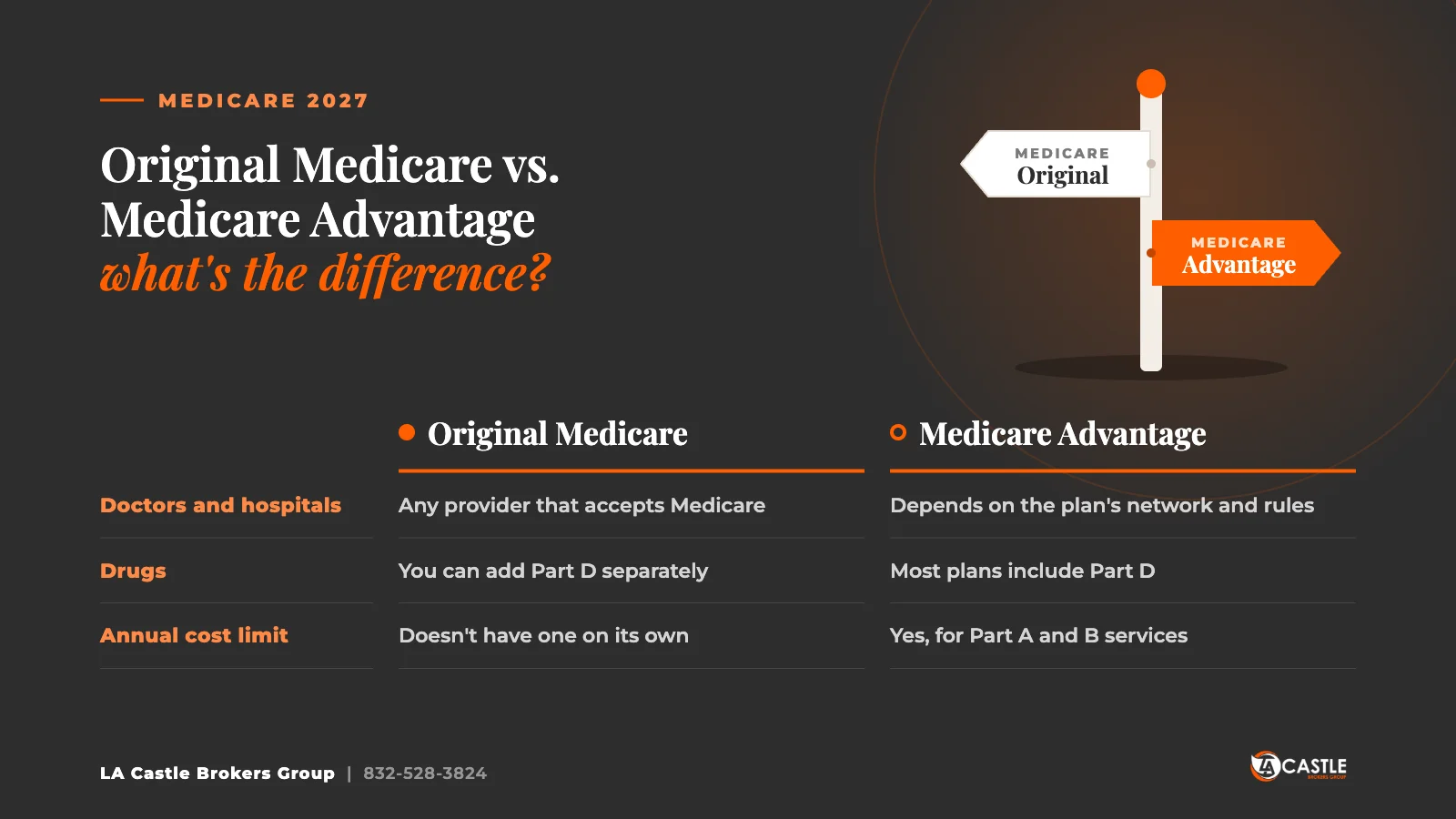
One of the main decisions will be between Original Medicare and Medicare Advantage.
Each option works differently and can change things like:
- How you get your medical services.
- Which doctors and hospitals you can use.
- How you get prescription drug coverage.
- What costs you may have during the year.
- What extra benefits may be available.
No option is automatically right for everyone.
You can read our comparison of Original Medicare and Medicare Advantage to better understand the differences before making a decision.
What if you're still working when you turn 65?
This is where you need to pay special attention.
If you or your spouse are still working and you have health coverage through that current job, you may be able to delay Part B enrollment without a late enrollment penalty.
However, not every type of coverage works the same way with Medicare.
For example, COBRA, retiree health coverage, VA coverage, and an individual Health Insurance Marketplace plan are not considered coverage based on current employment for this purpose.
That's why you should not cancel your insurance or delay Medicare just because you have other coverage. First, confirm how that coverage works with Medicare.
A decision that seems simple can have different consequences depending on your work situation and the type of insurance you have.
What if you miss your enrollment period?
If you don't enroll when you're eligible and you don't qualify for a Special Enrollment Period, you may have to wait to enroll.
You could also face a Part B late enrollment penalty that may continue for as long as you have that coverage.
Medicare also has a General Enrollment Period, from January 1 to March 31 each year, for certain people who missed other enrollment opportunities.
But the best strategy is not to get to that point.
Before you turn 65, confirm your dates and determine whether you need to enroll or whether you qualify to wait.
What information to have ready
Before you start your Medicare application, it helps to have information on hand such as:
- Your Social Security number.
- Your place of birth.
- Information about your current health insurance.
- Start and end dates of any group health plan you have or had after turning 65, if it applies.
- Information about your employer's or your spouse's coverage, if it applies.
Requirements may vary depending on your situation.
You don't have to make every decision on the same day
One of the most common mistakes when approaching 65 is thinking you have to understand all of Medicare before doing anything.
That's not the case.
You can do it in stages:
First, confirm when you're eligible and whether you need to enroll.
Then, check when your Parts A and B will start.
Finally, compare how you want to get your Medicare coverage and which options fit your needs.
What matters is starting with enough time.
Need help getting ready for Medicare?
At LA Castle Brokers Group, we can help you understand your enrollment dates, review your current situation, and learn about the Medicare options available to you.
Our goal is for you to understand your options before making a decision.
Or call us at 832-528-3824.
Frequently asked questions about enrolling in Medicare at 65
When can I enroll in Medicare if I'm turning 65?
For most people, the Initial Enrollment Period lasts seven months: it starts three months before the month they turn 65 and ends three months after. If your birthday is on the first day of the month, your dates work differently.
Can I apply for Medicare before I turn 65?
Yes. For most people who become eligible at 65, the Initial Enrollment Period starts three months before the month of their birthday.
Does Medicare enroll me automatically when I turn 65?
It depends. If you already get Social Security benefits before you turn 65, enrollment in Medicare Part A and Part B is generally automatic. If you don't get those benefits yet, you'll usually need to apply for Medicare.
What if I'm still working and have health insurance?
If you have group health plan coverage based on your current employment or your spouse's, you may be able to delay Part B and later use a Special Enrollment Period. However, not all coverage qualifies the same way, so it's important to check your situation before delaying Medicare.
Do I have to choose Original Medicare or Medicare Advantage right away?
You don't have to make all your decisions on the same day. First, understand when you're eligible for Medicare and when your Parts A and B will start. Then you can compare the ways to get your coverage.
Where do I enroll in Medicare Part A and Part B?
Enrollment in Medicare Part A and Part B is done through the Social Security Administration.
LA Castle Brokers Group
Houston, Texas
We speak English and Spanish.